Highlighted projects
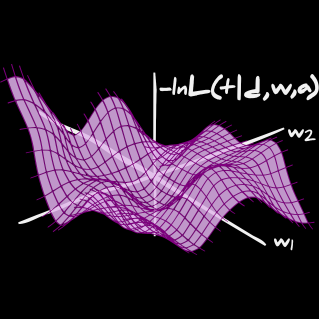
Why neural networks don’t work and how to use them
Throughout the scientific community neural networks are being used for a variety of different tasks. Unfortunately, this is normally done without thought of the statistical implication. Here we lay down the statistical notions showing why neural networks cannot be used by themselves for scientific purposes. We then provide a suite of methods which allows them to be used safely within a statistical framework for parameter inference.
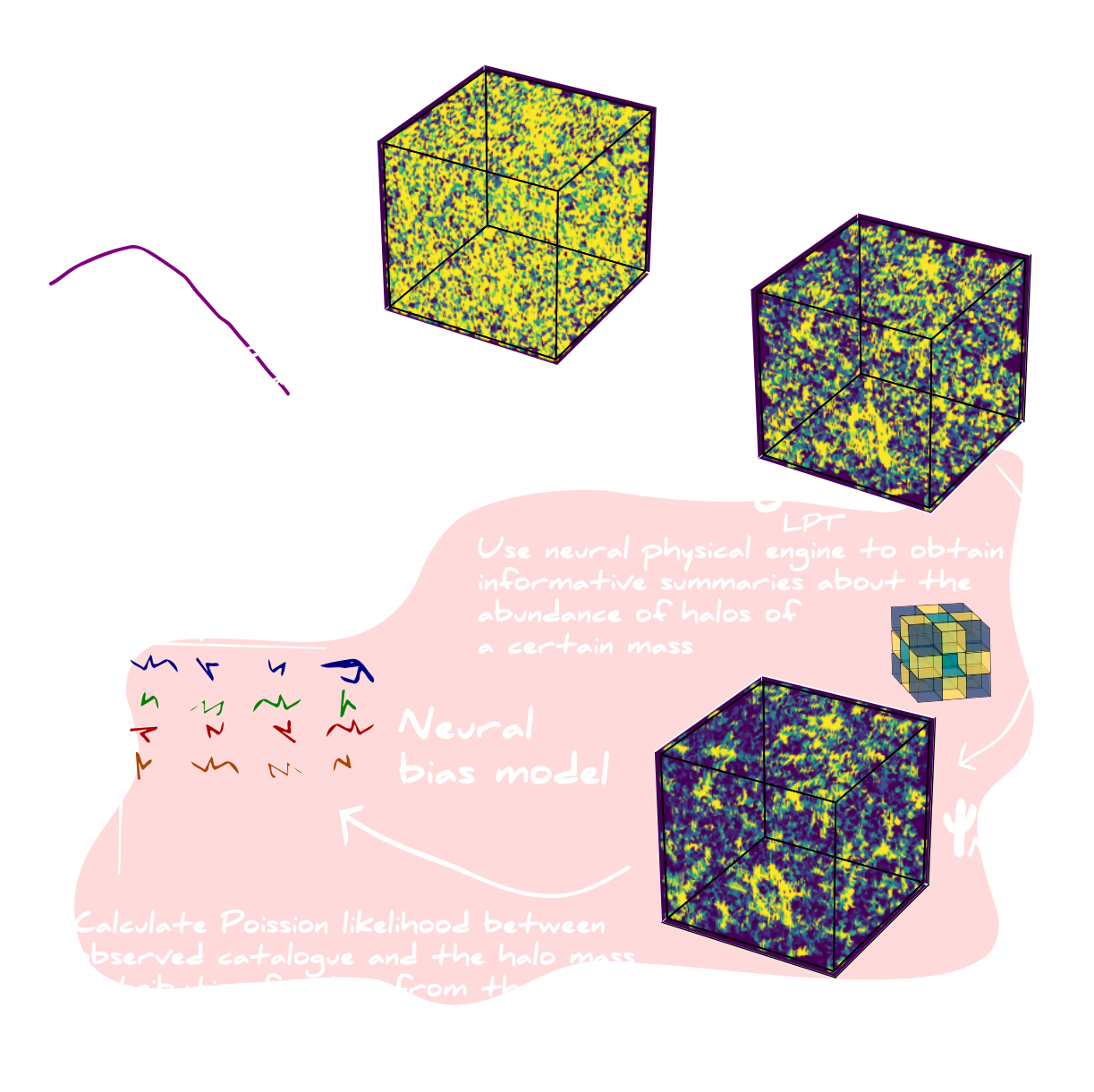
Neural physical engines for inferring the halo mass distribution function
The tracing of the dark matter distribution by halos is complex and requires the knowledge of unknown small scale astrophysics. We use physically motivated neural networks to agnostically probe this bias model. The tunable parameters of the neural network are inferred as part of the BORG algorithm, and provide an exceptional fit to the halo mass distribution function. No training data is necessary since the network is conditioned on the observed halo catalogue directly.
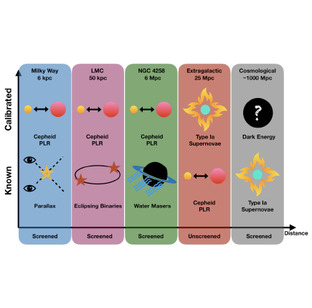
A fifth-force resolution of the Hubble tension
The tension between low and high redshift probes of $H_0$ is possibly the most pressing problem in cosmology today. We explore a novel resolution involving screened fifth forces, which breaks the assumption that gravity behaves identically across rungs of the cosmic distance ladder. Including existing constraints on our models, we are able to reduce the $H_0$ tension from 4.4$\sigma$ to 1.5$\sigma$.
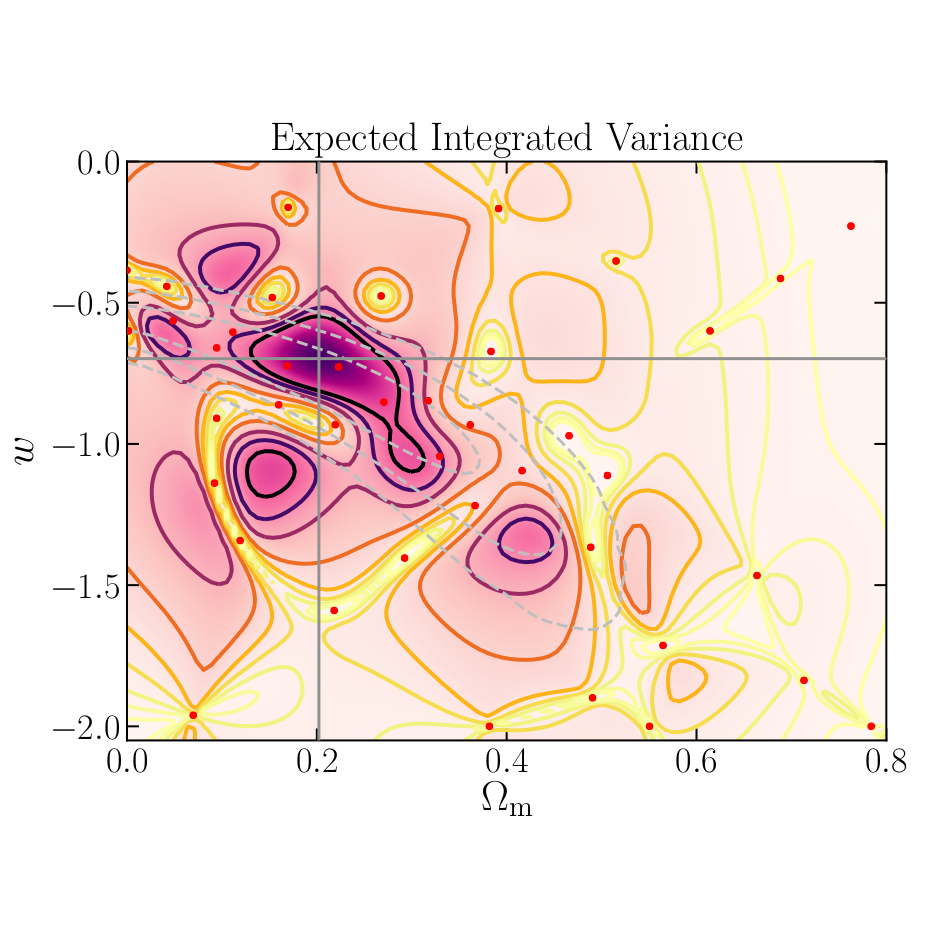
Algorithms for likelihood-free cosmological data analysis
Many numerical models in cosmology can only be simulated forward. We have developed two novel algorithms to perform rigorous statistical inference from these models, in two different scenarios. The first one, BOLFI, reduces the number of required simulations for physical parameter inference by several orders of magnitude. The second one, SELFI, allows a full reconstruction of the primordial matter power spectrum.
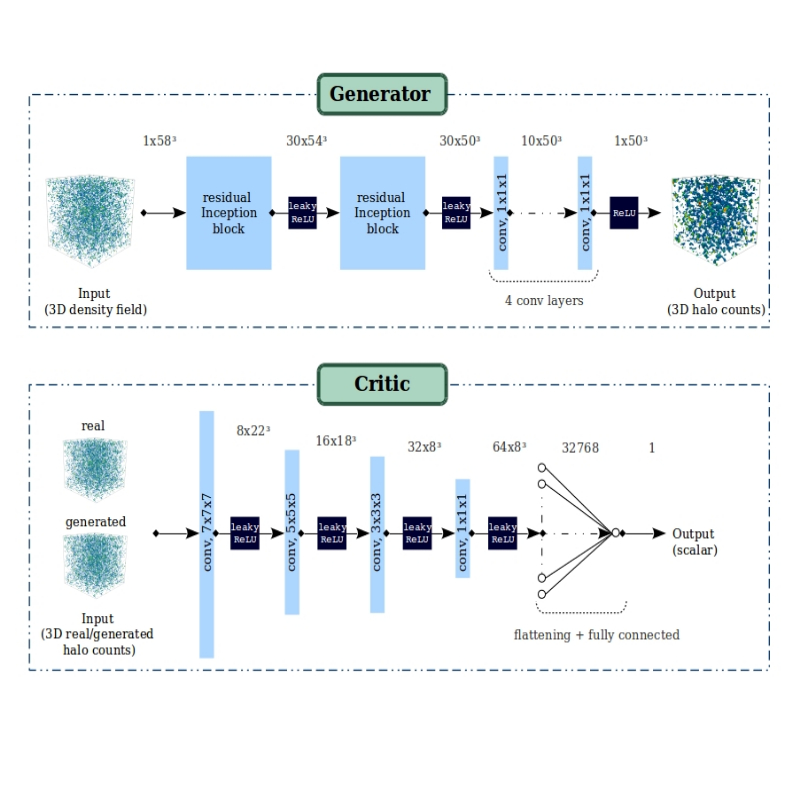
Painting halos from 3D dark matter fields
We present a novel halo painting network that learns to map approximate 3D dark matter fields to realistic halo distributions. We use simple physical principles to train the mapping network to learn the non-trivial local relation between dark matter density field and halo distributions without relying on a physical model.
D. K. Ramanah,
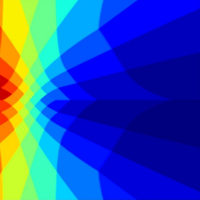
Bayesian treatment of unknown foregrounds
We present an effective solution to the unknown foreground contamination problem in galaxy survey analyses. We have developed a robust likelihood designed to account for effects due to unknown foreground and target contaminations by effectively marginalizing over the unknown large-scale contamination amplitudes.
D. Kodi Ramanah, N. Porqueres,
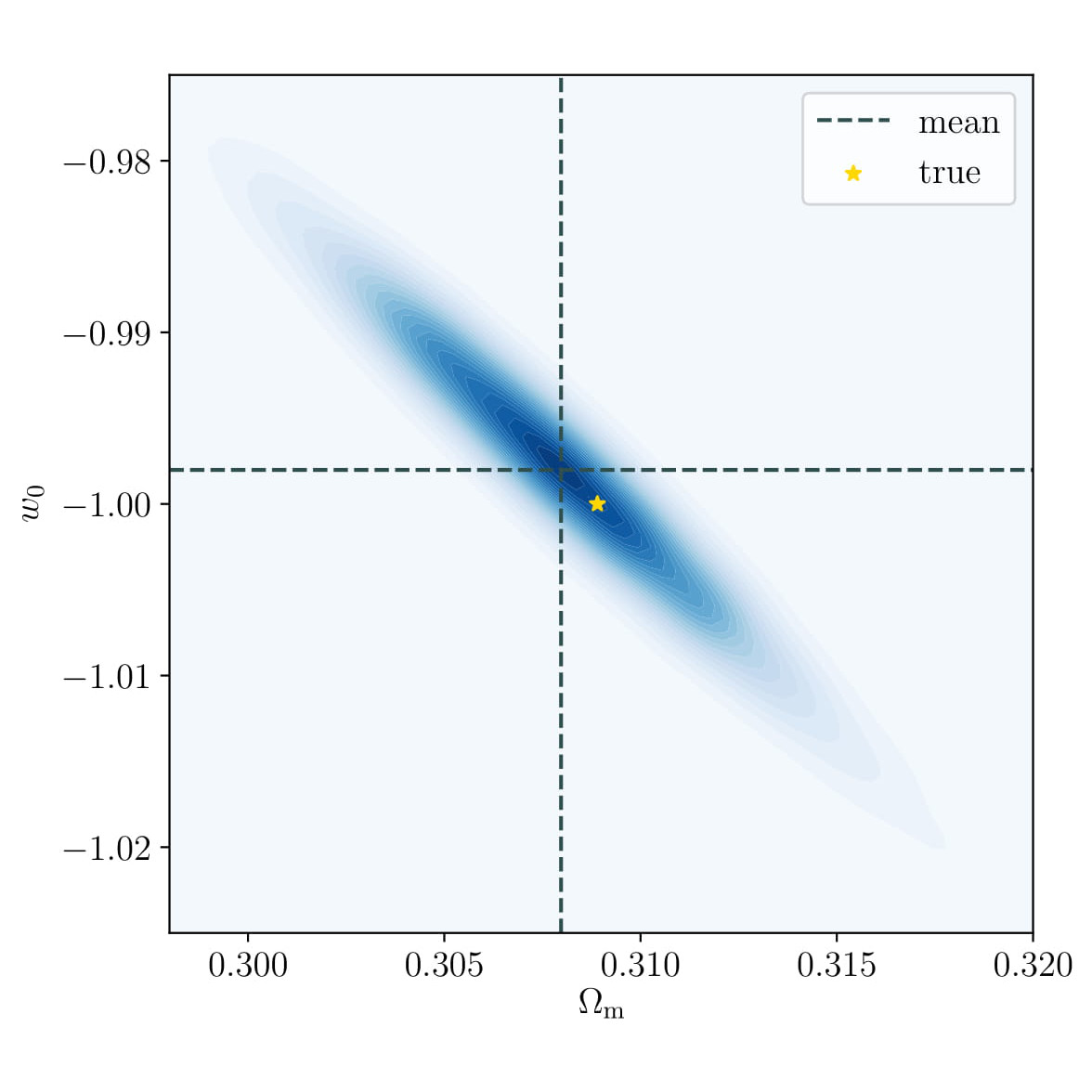
Precision cosmology with expansion
We have developed a novel algorithm to infer cosmological constraints within a large-scale Bayesian inference framework. This hierarchical approach, relying purely on the geometrical symmetries of the cosmological principle, is among the first methods to extract a large fraction of information from statistics other than that of direct density contrast correlations.
D. Kodi Ramanah, G. Lavaux,
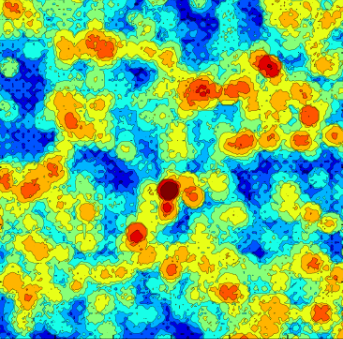
Fifth force on galaxy cluster scale
The tightest bound on fifth-force class of modified gravity models are found on the basis of the BORG-PM model and innovative small scale modelling of the gravitational field. Those bounds even hint at possible positive detection, though more investigation on the impact of galaxy physics is required to assess this claim.
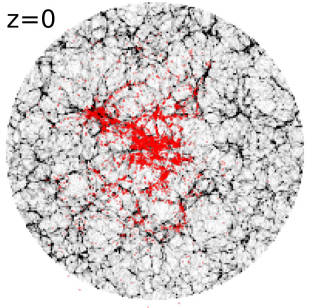
The BORG Particle-Mesh model
We have published a new algorithm that allows to adjust with finely details the structure of the Local Universe from 2M++ data. We present some direct applications to mass measurements, peculiar velocities and density fluctuations.
G. Lavaux, J. Jasche,