Highlighted projects
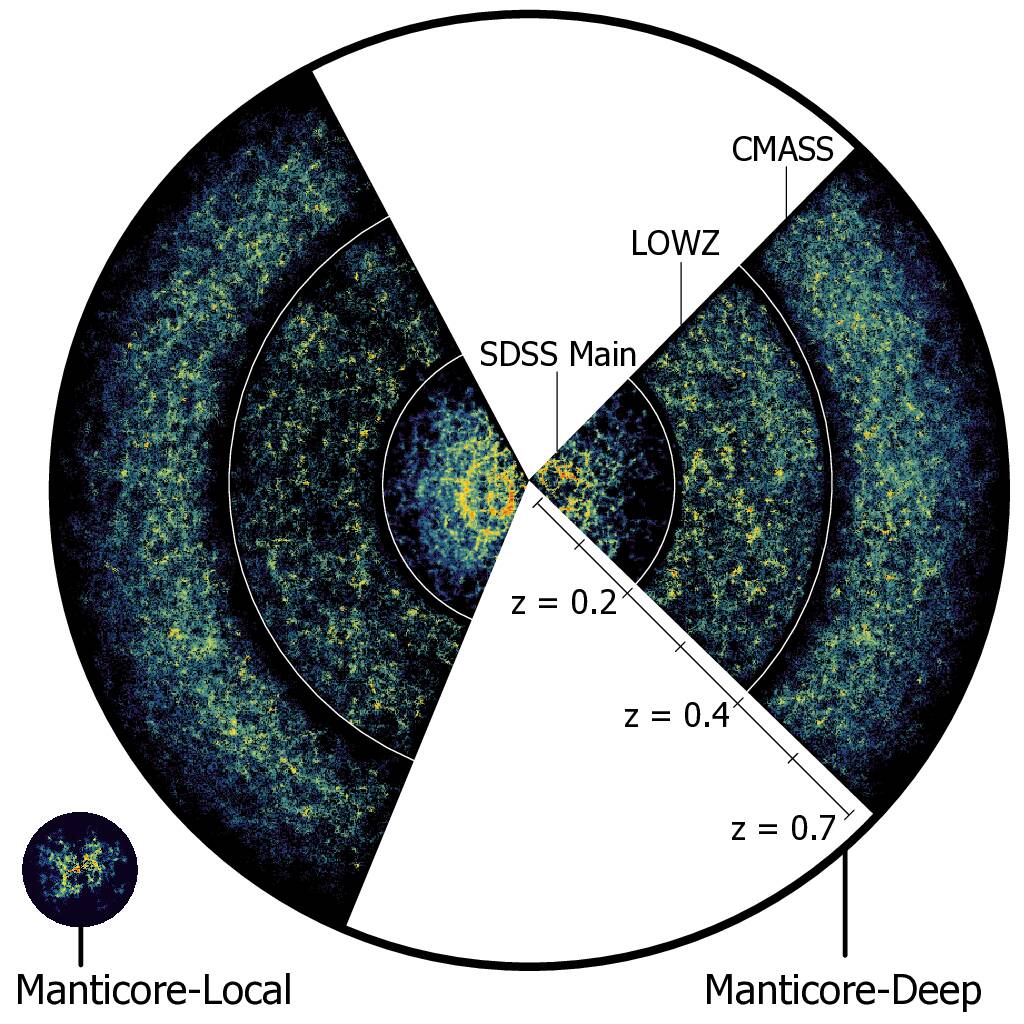
Manticore-Deep: Bayesian Digital Twins of Cosmic Structure Across SDSS and BOSS Volumes
Manticore-Deep is the first high-resolution Bayesian reconstruction of cosmic structure across a (4 h⁻¹Gpc)³ volume out to z≈0.7, jointly constraining 2M++, 6dFGS, 2dFGRS, SDSS, and BOSS.
S. McAlpine, J. Jasche, G. Lavaux, L. Doeser, A. Loureiro,
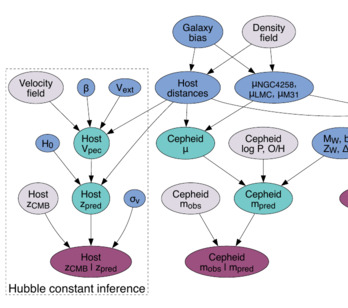
A 1.8% measurement of the Hubble constant from Cepheids alone
The strongest tension within the concordance model of cosmology is a mismatch between the Universe's expansion rate inferred from the cosmic microwave background vs the local distance ladder. We construct a Bayesian hierarchical model to infer this rate locally but without requiring supernovae. We still find a significant "Hubble tension", and achieve unprecedented precision by using BORG velocity fields.
H. Desmond, R. Stiskalek,
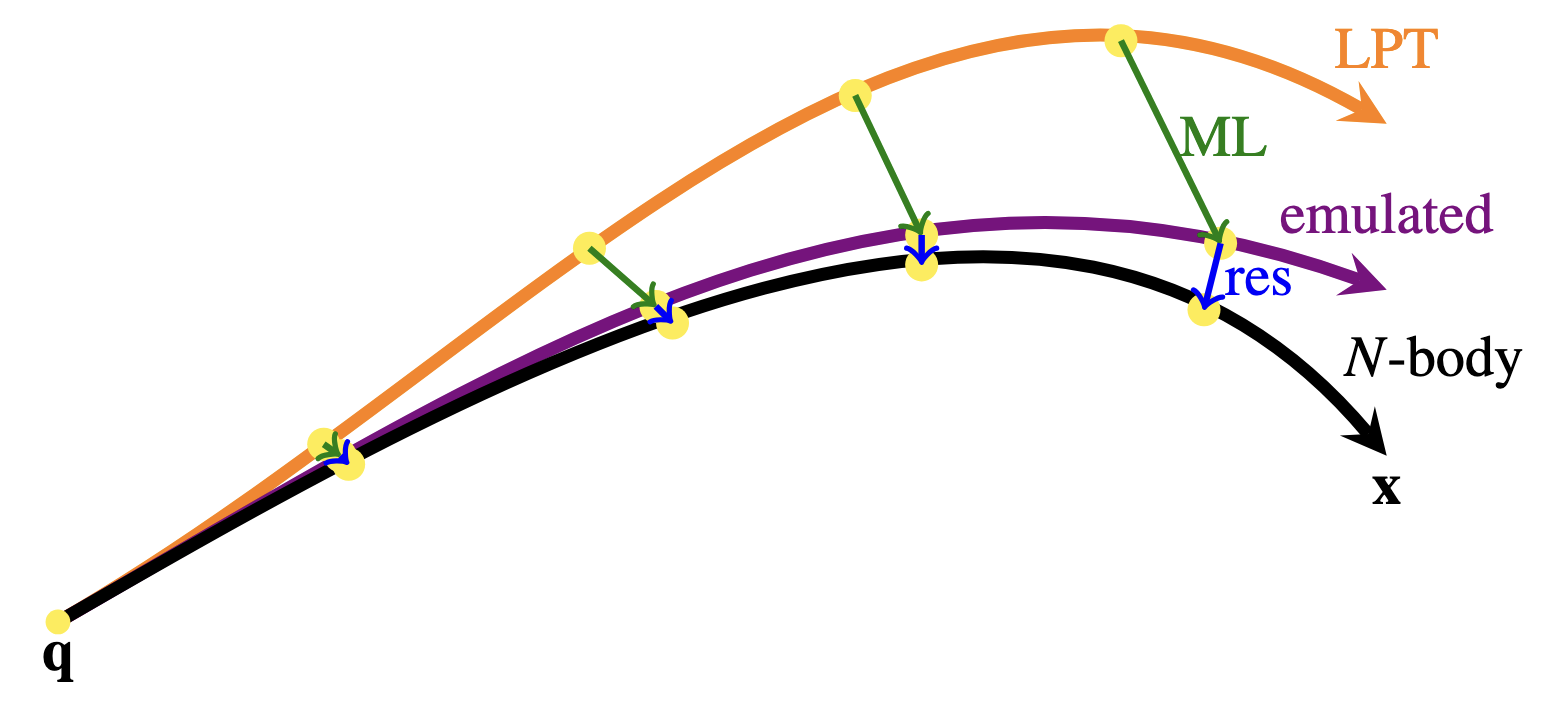
COCA - N-body simulations in an emulated frame of reference
N-body simulations are key to cosmology but are computationally expensive. ML can speed them up, but can we trust the results? We propose a new method of combining ML and simulations (COmoving Computer Acceleration - COCA) which can catch mistakes made by ML and correct for them.
D.J. Bartlett, M. Chiarenza, L. Doeser, F. Leclercq,
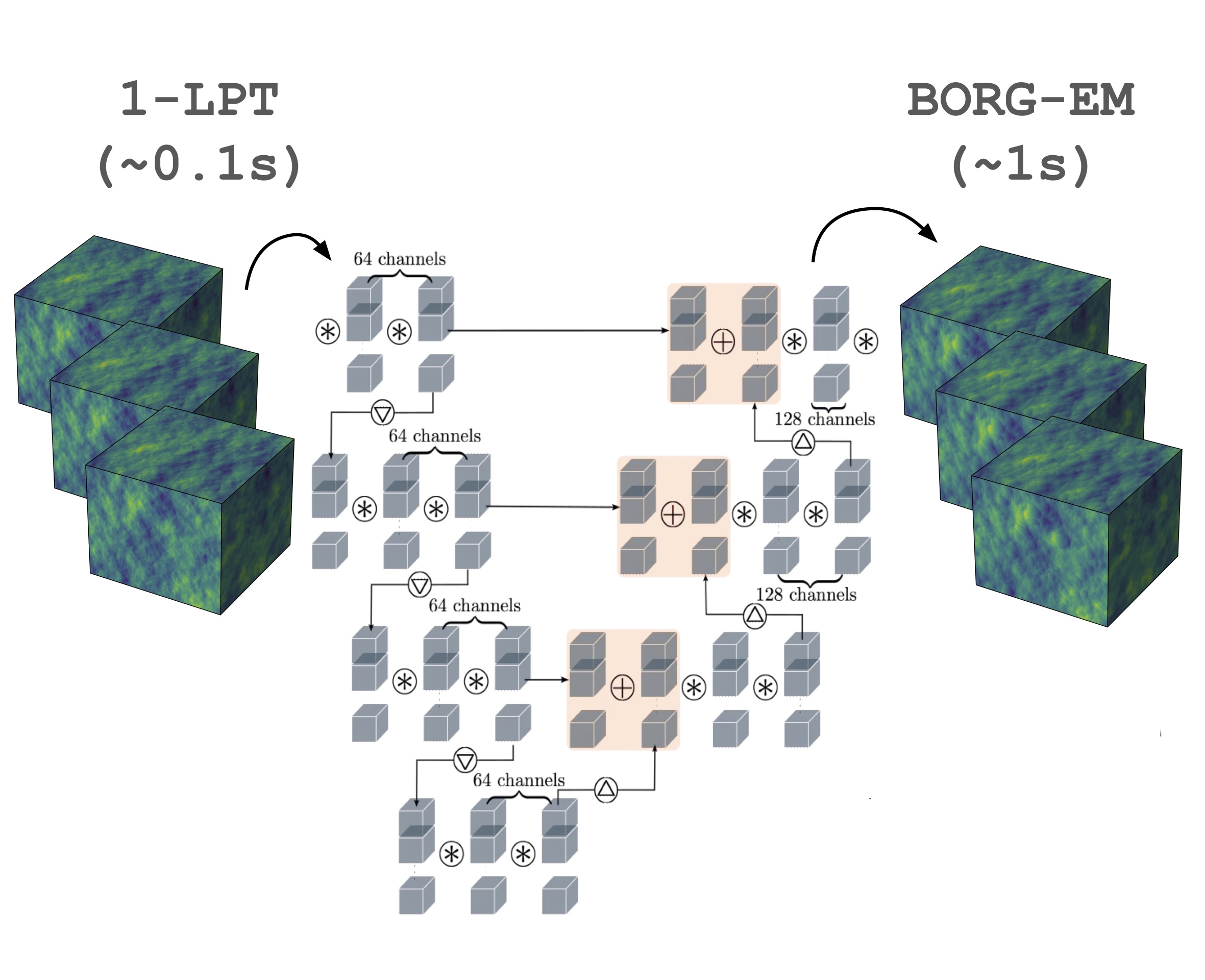
Bayesian Inference of Initial Conditions from Non-Linear Cosmic Structures using Field-Level Emulators
Leveraging a highly accurate physics model essential for next-generation cosmological analysis typically involves significant computational demands. We here propose a solution by integrating a machine learning-based emulator into the BORG algorithm for effective sampling of cosmic initial conditions from non-linear cosmic structures.
L. Doeser, D. Jamieson, S. Stopyra, G. Lavaux, F. Leclercq, J. Jasche,
Field-level large-scale structure meets the CMB
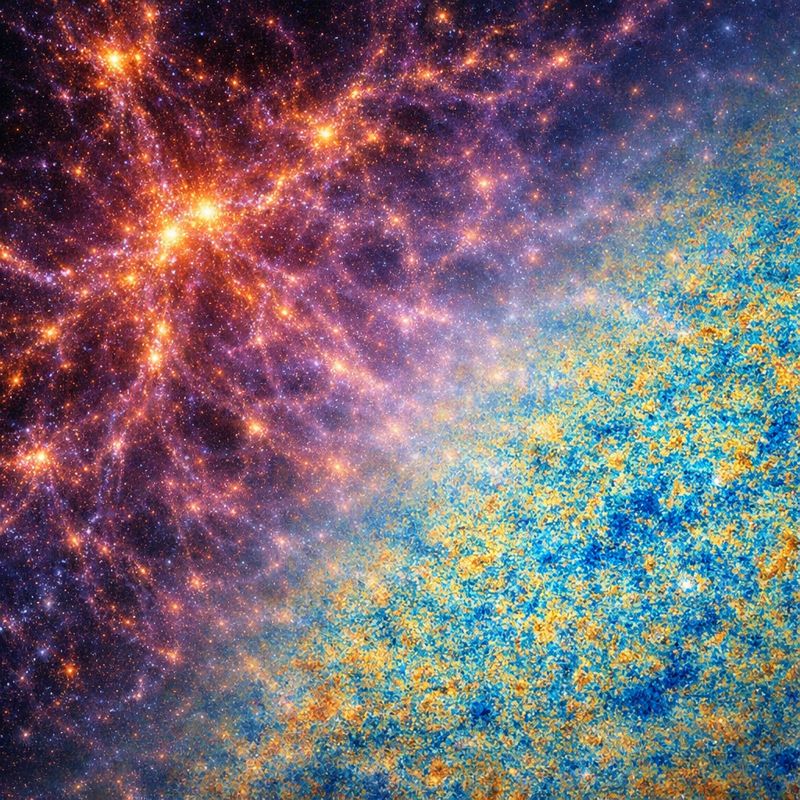
BORG is designed for local large-scale structure, but it has significant potential for CMB studies as well. We develop a framework for connecting constrained simulations to the thermal Sunyaez-Zel'dovich effect in the CMB, and use it to show the superiority of BORG relative to other methods and create a new calibration of the cluster mass-observable relation.
H. Desmond, R. Stiskalek,
Constraining dark matter annihilation and decay in large-scale structures
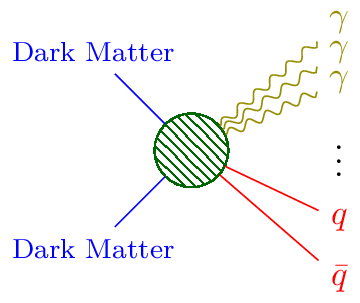
The identification of dark matter is a crucial task of modern physics. We present a full-sky, field-level search for dark matter annihilation and decay in the large-scale structure of the nearby universe, exploiting more information than conventional analyses targetting specific objects. We find no evidence for such effects, placing new constraints on the rates of dark matter interactions.
H. Desmond, D. Bartlett,
Field-level inference on galaxy intrinsic alignment
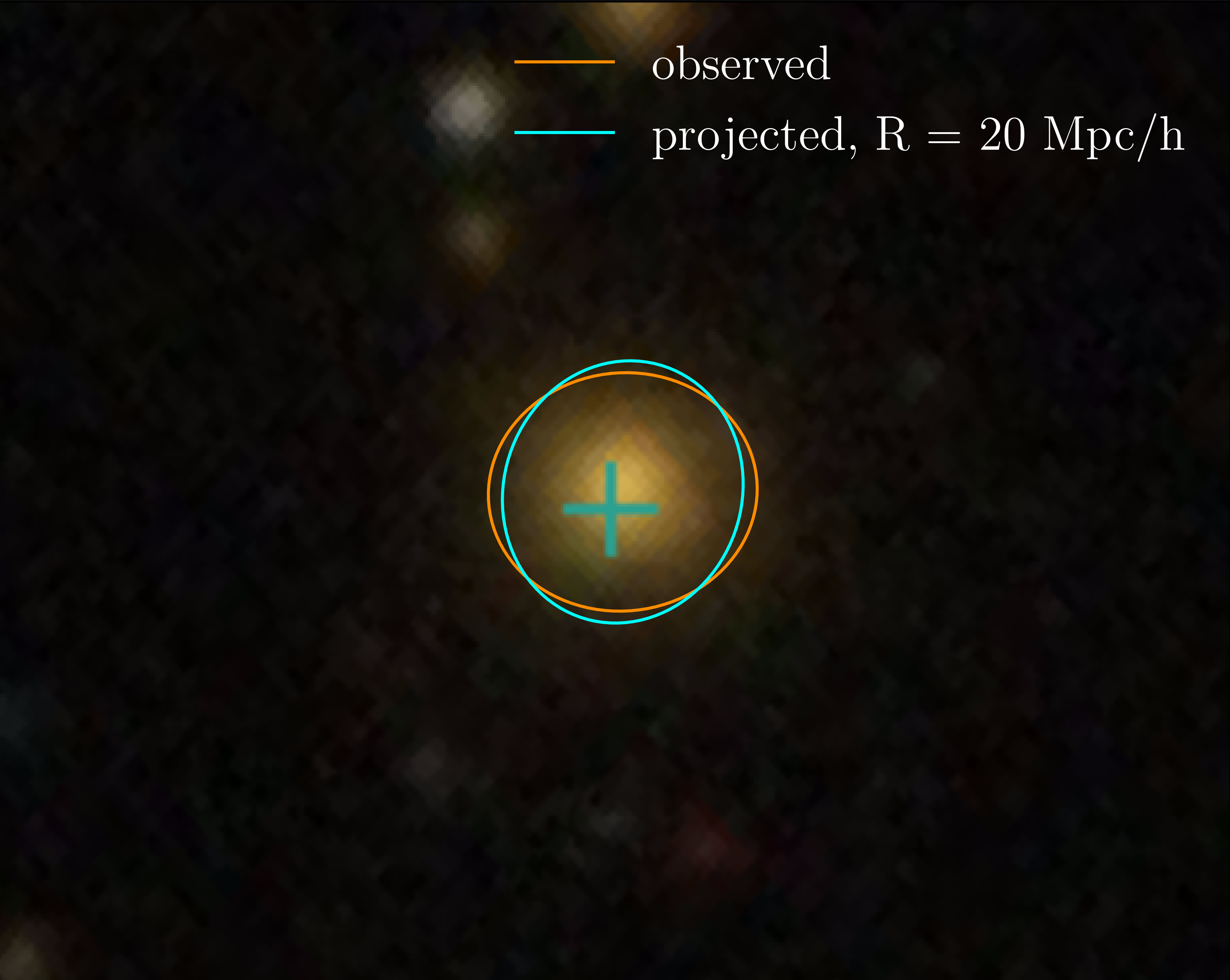
Elliptical galaxies tend to align with the large scale structures for two reasons: through intrinsic deformations and tilting during their formation or gravitational weak lensing. Here, we constrain the intrinsic alignment for luminous red giants in the SDSS3-BOSS sample, using 3D tidal fields constrained with forward modeling of SDSS3-BOSS data. We have found 4σ evidence of intrinsic alignment at 20 Mpc/h.
Is the speed of light energy dependent?
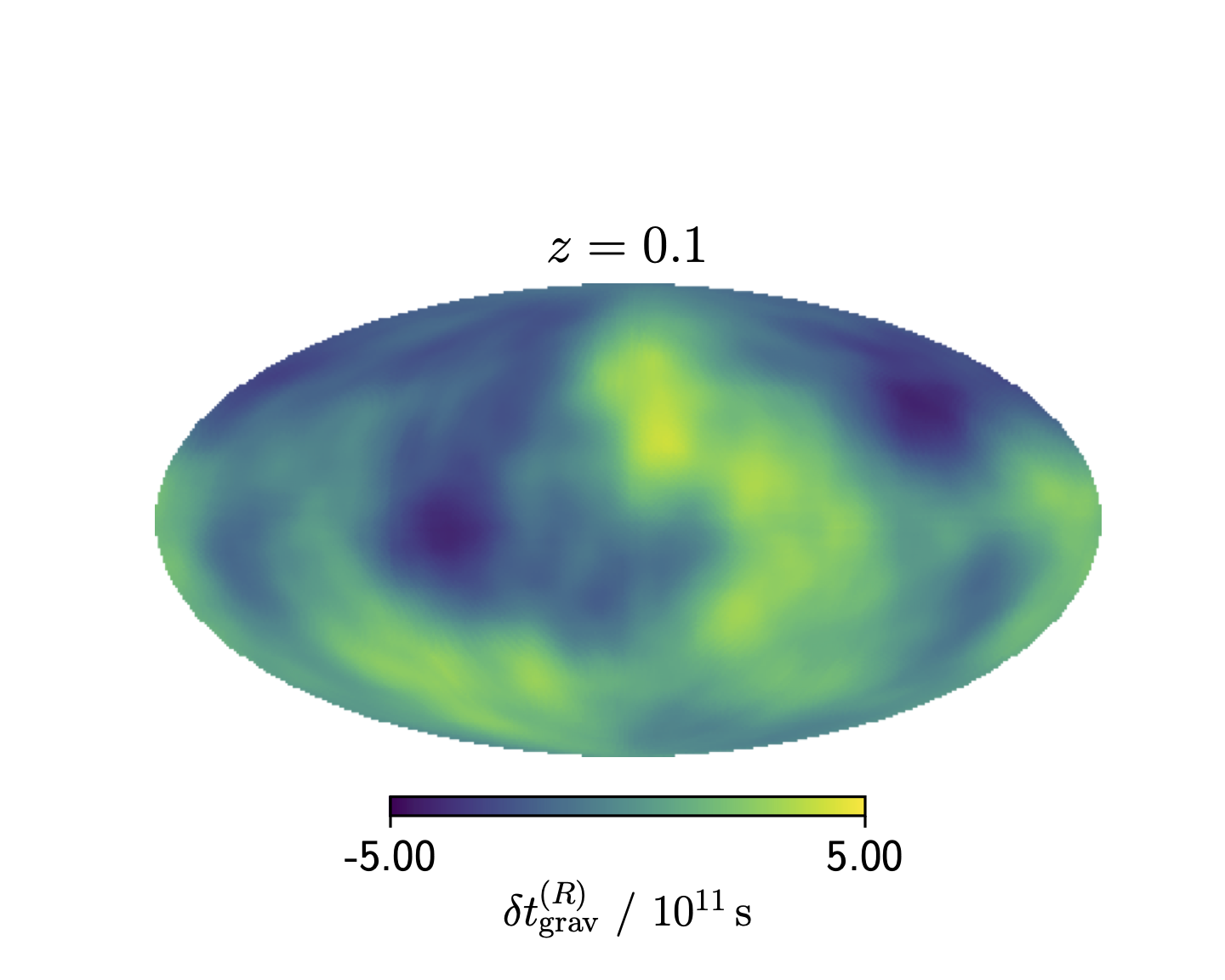
High energy astrophysical transients at cosmological distances allow us to test the fundamental assumptions of the standard models of cosmology and particle physics, such as the Weak Equivalence Principle, Lorentz Invariance or the massless nature of the photon. A violation of any of these would result in energy-dependent arrival times for photons from distant sources. We forward model these time delays for gamma ray bursts using the BORG SDSS-III/BOSS reconstruction and compare to data to constrain the quantum gravity energy scale, the mass of the photon, and violations of the Weak Equivalence Principle.
Testing gravity with the positions of supermassive black holes
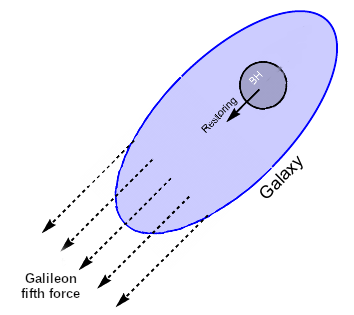
A key frontier in cosmology is testing the nature of gravity. We use constrained simulations of local structure based on the BORG algorithm to map out the scalar field in galileon gravity, a leading competitor to General Relativity. From this we predict the behaviour of supermassive black holes in galaxies, and then compare with observational data to constrain the coupling strength of the galileon.
Simulating the Universe on a mobile phone
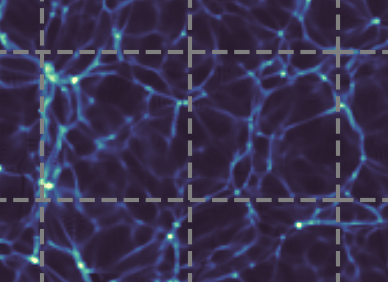
Existing cosmological simulation methods lack a high degree of parallelism due to the long-range nature of the gravitational force, which limits the size of simulations that can be run at high resolution. In this post, we discuss a new, perfectly parallel algorithm to simulate the Universe on a variety of hardware architectures.
F. Leclercq, G. Lavaux,